Fabric Collage
By: Em Stone
What this project is:
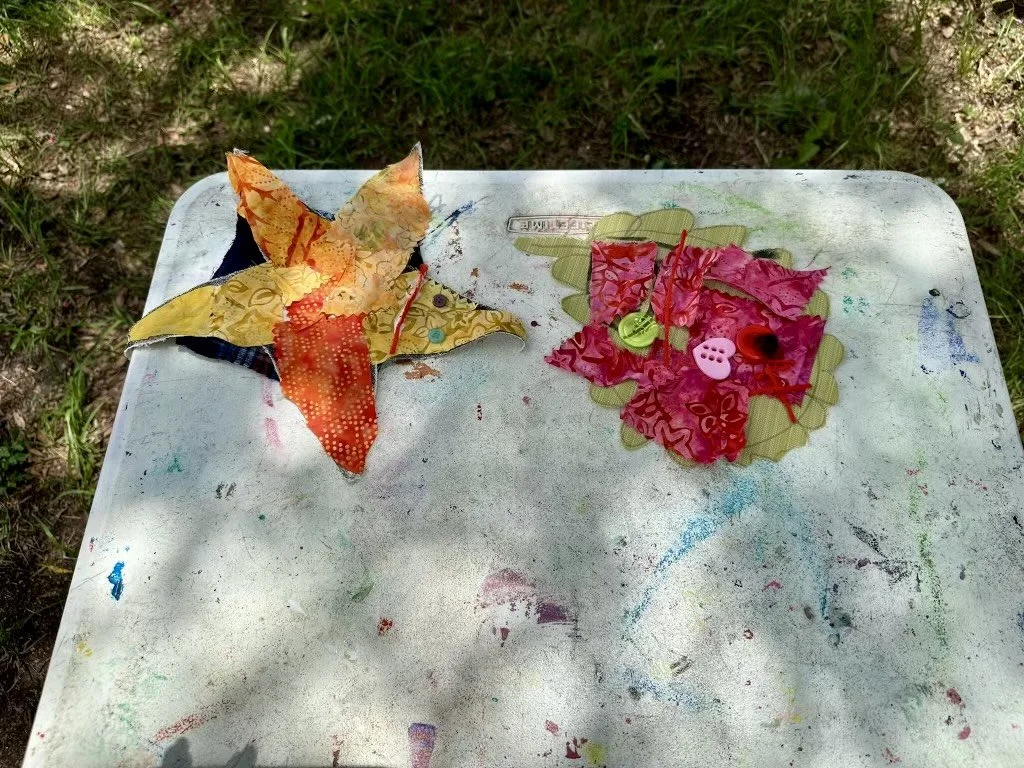
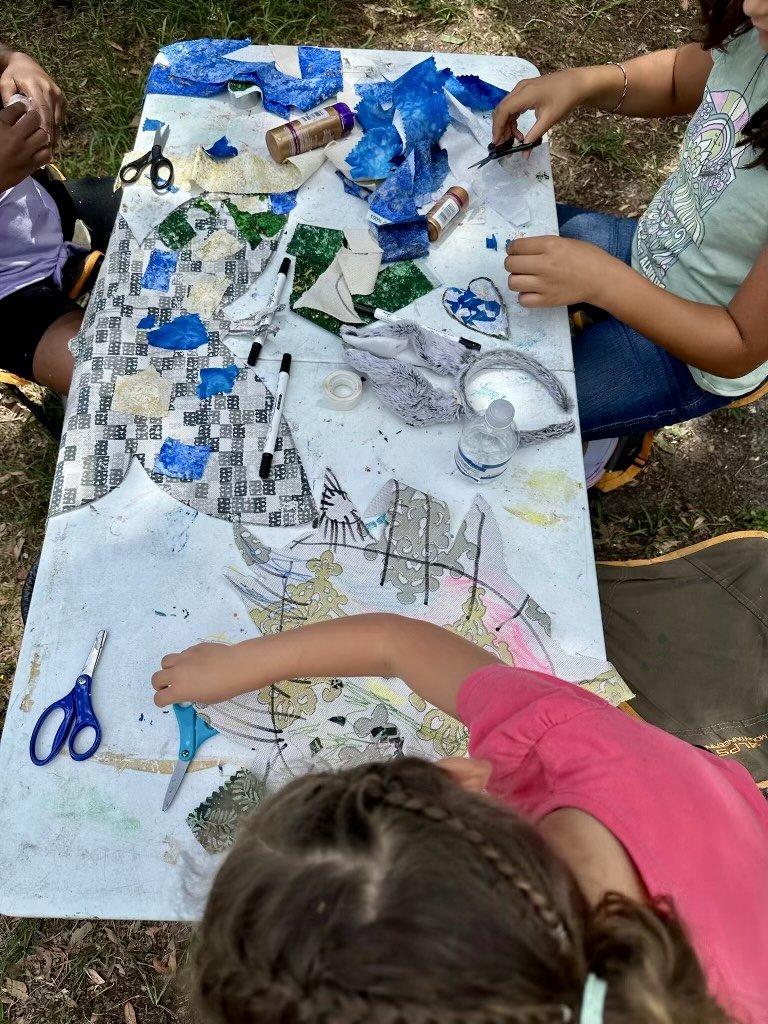
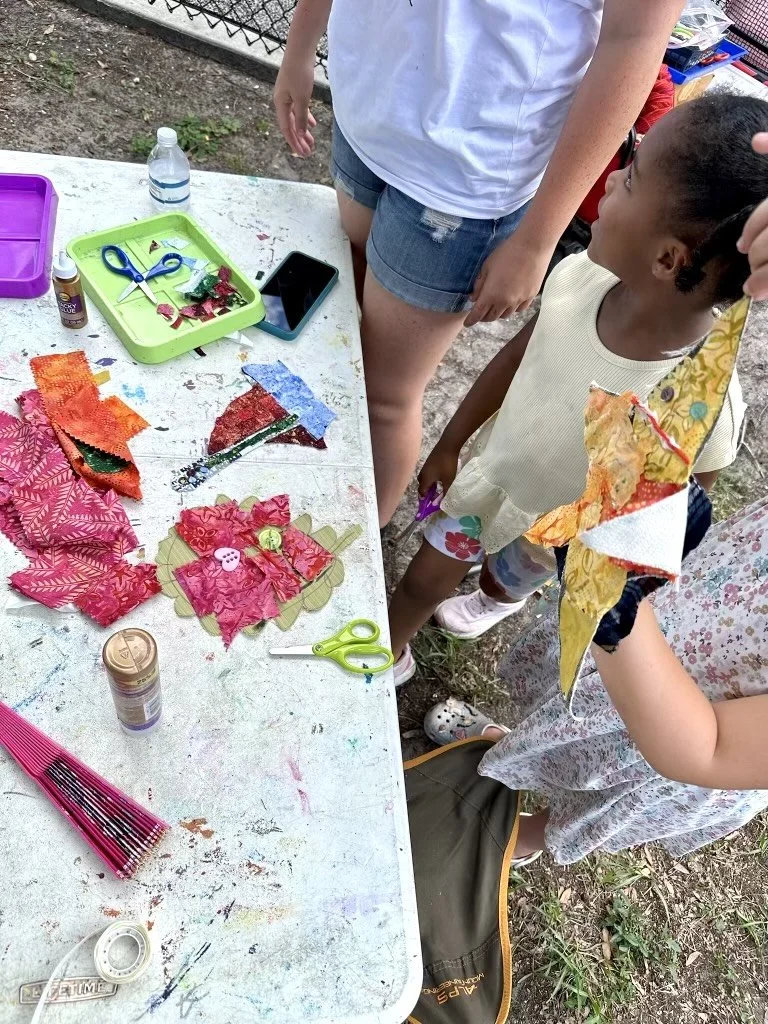
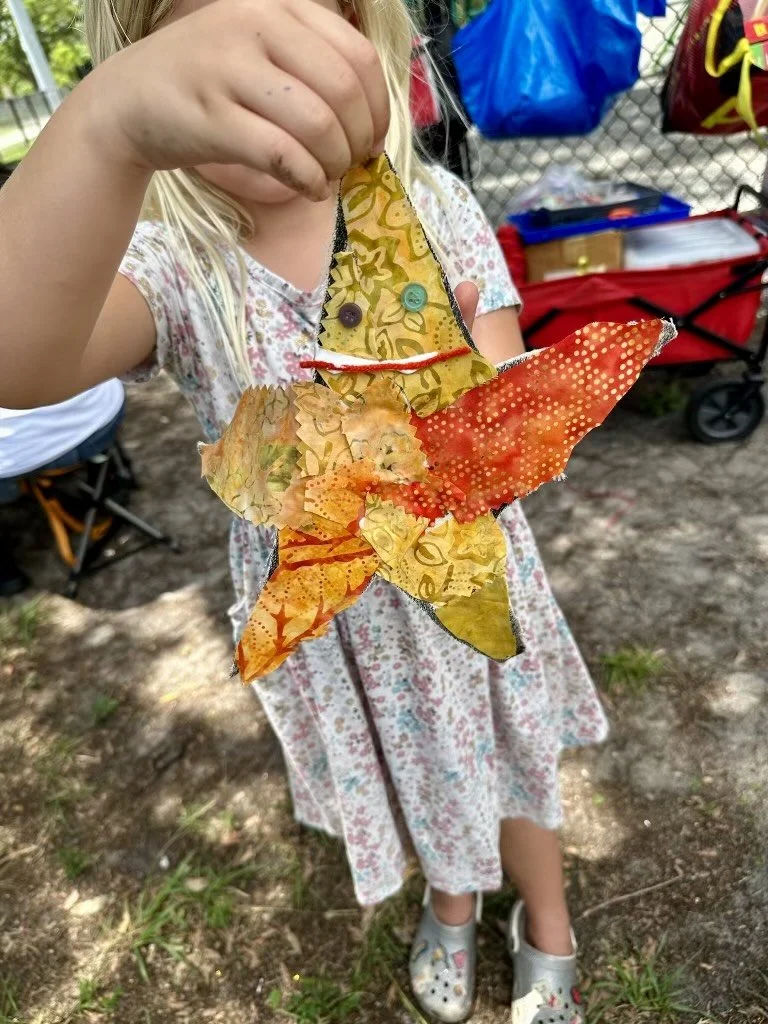
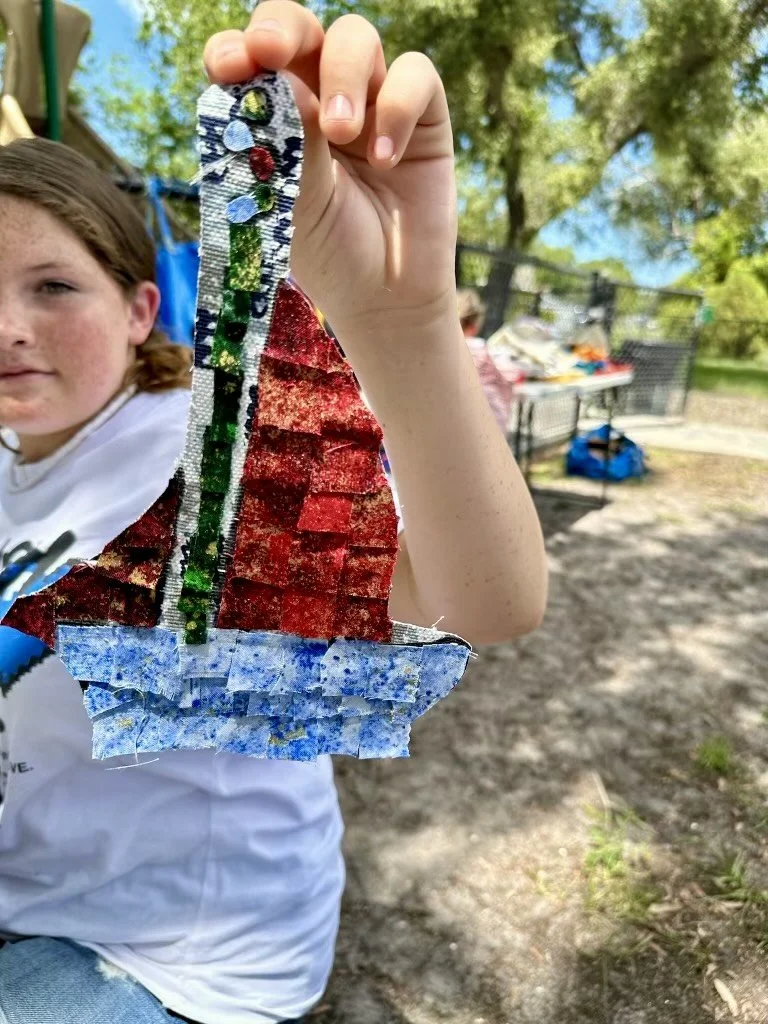
Fabric Collage is a very fun and open ended activity where children use fabric scraps and glue to create collaged images, scenes, or patterns. It's great for a multi-aged group exploring their imagination and using materials in unusual ways.
What you'll provide:
Assorted scrap fabric
Fabric or tacky glue
Scissors – fabric scissors are best, but younger kids might need some support
Thick paper or cardboard
Optional materials:
Googly eyes
Gems
Big plastic embroidery needles
Yarn
Regular sewing or embroidery needles
Thread
Paper or cardboard to glue onto
Cups for glue + popsicle sticks
Pillow stuffing
How to set up the table:
Start by putting all the materials out on one table that’s available to everyone.
Have work tables separate from the materials table. This helps worktime be less overwhelming to participants, as it gives them each room to work and spread out.
How to facilitate (without taking over):
This is a relatively low instruction activity because it’s so open ended. There’s a lot of room for exploring techniques and experimenting as a group. There are a few ways to go about making Fabric Collage:
Start by drawing a shape (star, heart, peace sign, etc.) with glue onto a piece of paper or cardboard.
Then lay a long piece of yarn down on top of the glue, let it dry.
Fill the inside of the shape with small fabric scraps, glueing them as you go
Another option is to make a tiny pillow:
Cut two pieces of fabric into the exact same shape. It’s easiest to lay them over top of each other and cut them together.
Then take either a needle and thread or embroidery needle and string/yarn, sewing all the way around the fabric shape.
Make sure you leave a little opening to stuff the inside with either fabric scraps or stuffing
Stuff your pillow, not too much or too little
Then close up the opening with your needle and thread
To ensure the thread stays closed, stitch a few times in the same place at the end.
From here, you can decorate the pillow by sewing or gluing fabric, gems, googly eyes, etc.
Helpful questions:
Some helpful questions to ask artists about their process and their product:
What are some ideas of what you can make with these materials?
There might be some trial and error with this activity, so it’s important for facilitators to be fully engaged and ready to ask questions and make suggestions based on where each participant is at in their project.
Most important:
Reminding them that this activity is all about process over product, meaning it doesn’t matter what the end result of your project looks like, it’s more important to enjoy the process of making and trying something new.