Texture Scavenger Hunt
What this project is:
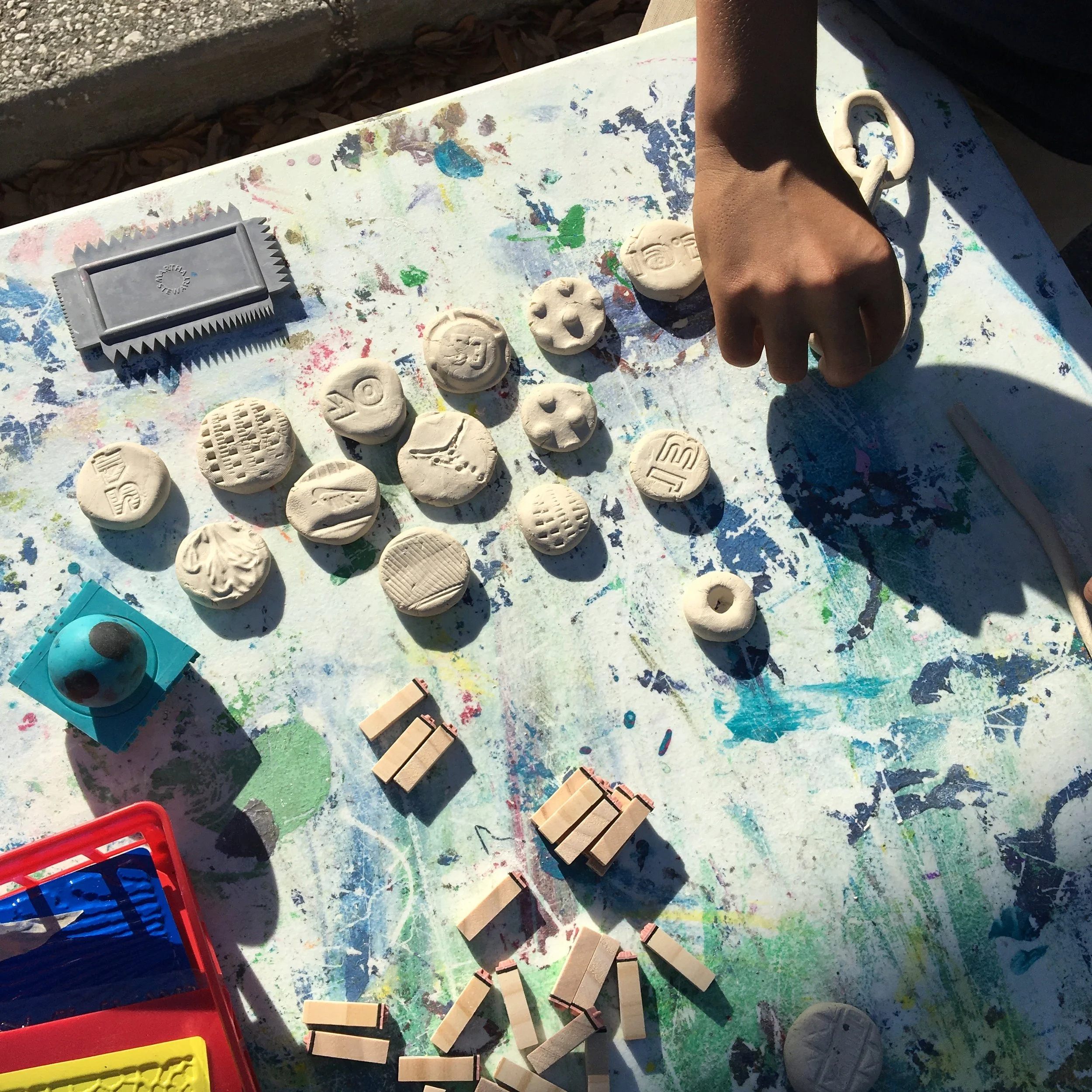
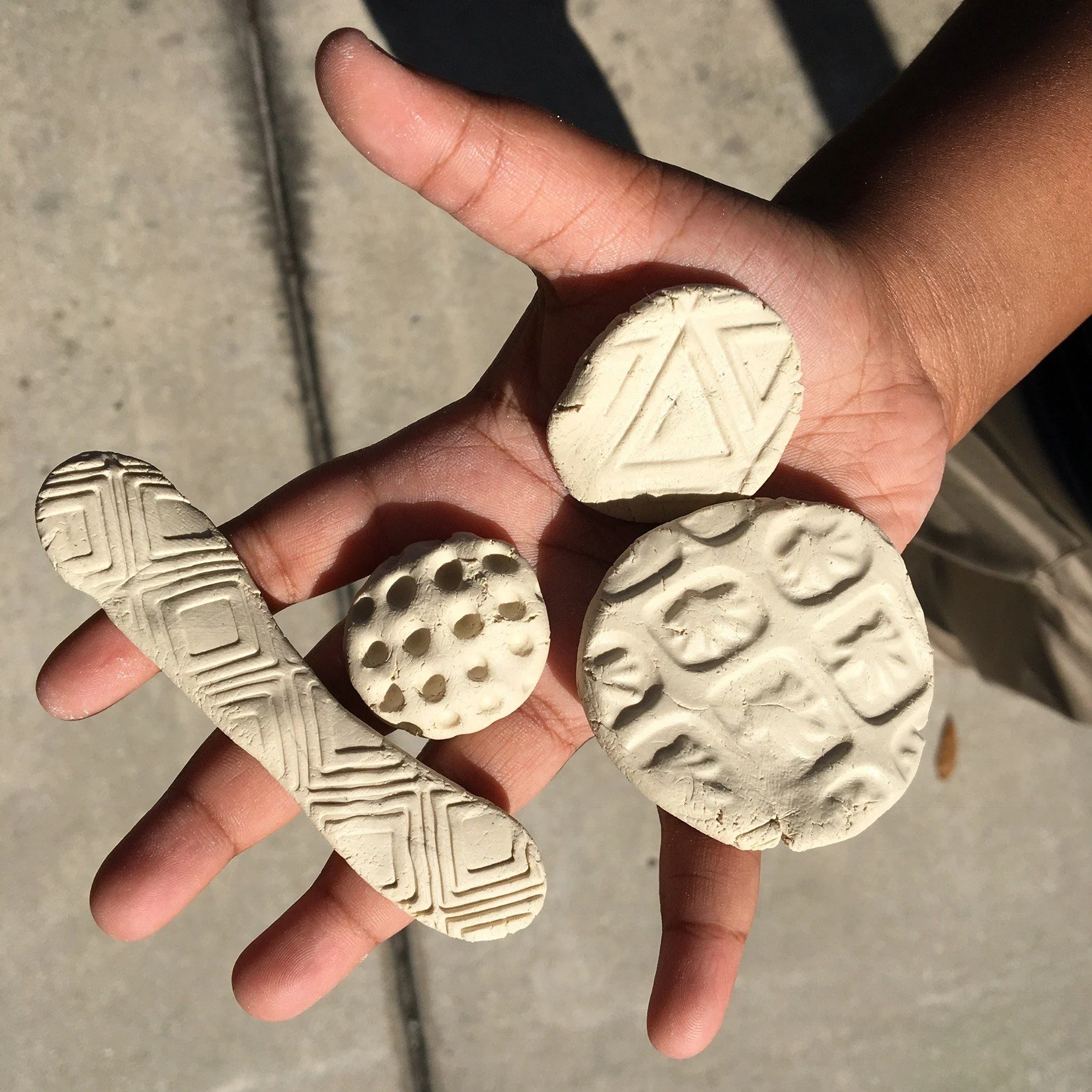
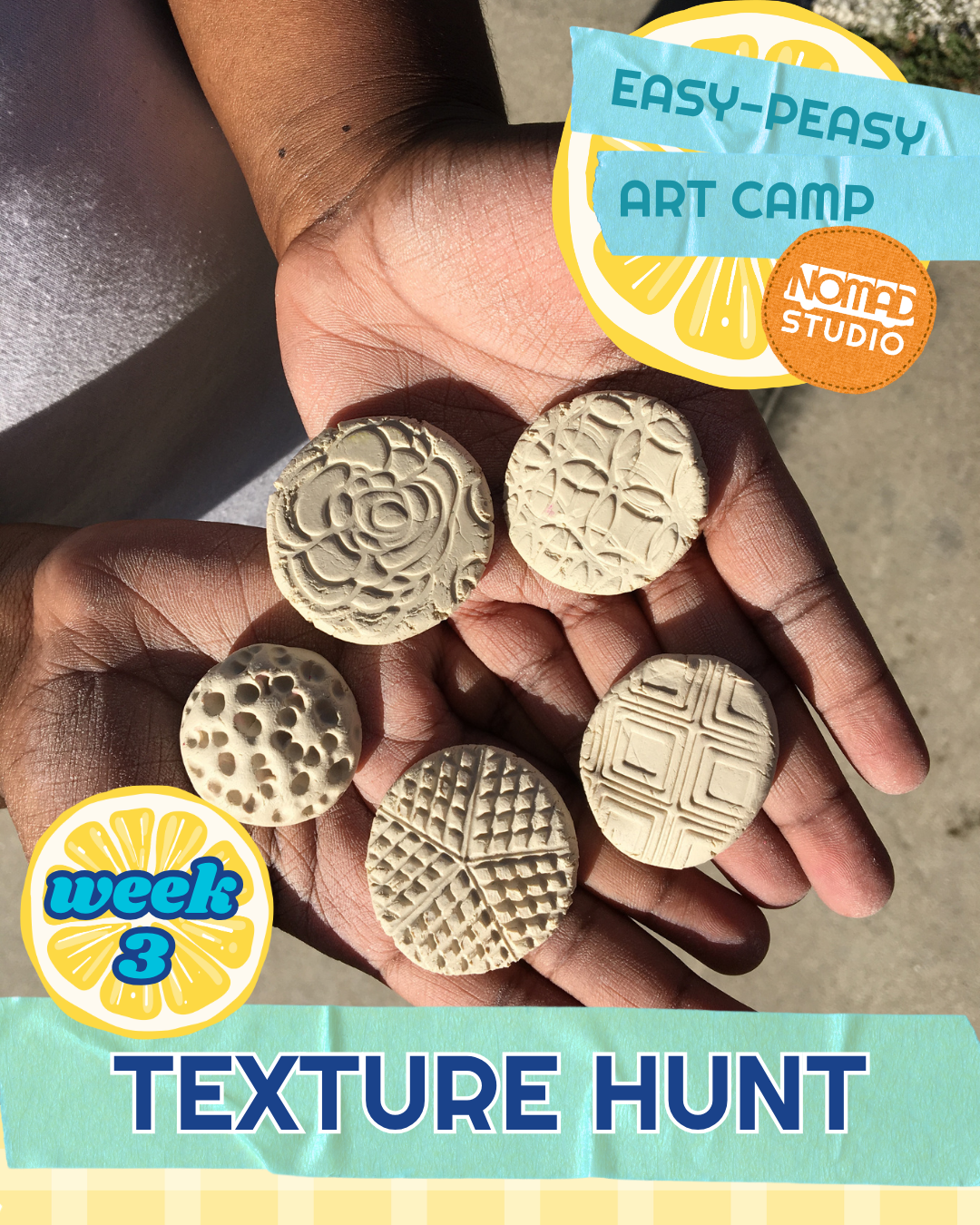
Texture Scavenger Hunt is an open-ended activity where children explore the world around them by finding and collecting textures, then capturing those textures as impressions in air-dry clay. There is no “right” result—the focus is on observation, sensory exploration, and curiosity.
What you’ll provide:
Washable air-dry clay
Optional (for ease, not required):
A small container or tray to carry clay pieces
A bag or box for transporting finished impressions
How to set up the table:
Cover your table with paper or a tablecloth you use for crafting. Open your clay and divide in half again and again until you have many smaller pieces about 1.5” in size so they’re easy for little hands to use.
Lay the pieces out so they’re ready to grab for next steps.
How to get started:
Work with your child to roll the clay pieces into spheres—this is great for building fine motor skills. Then gently flatten each one into a small “biscuit” shape (flat, but not squished).
Head out together to look for textures! Show your child how to press the clay onto surfaces:
Firm enough to capture the texture
Not so hard that the clay flattens completely
You can start together, then let them take the lead as they gain confidence exploring.
Once you’ve collected impressions, return to your workspace and observe them together:
See if they can remember or guess where each texture came from
Notice that letters and numbers appear backwards
Explore how the textures can be both seen and felt
How to facilitate (without taking over):
Start by modeling curiosity—wonder out loud: “I wonder what this will look like?”
Let your child lead the exploration and choose where to press their clay
Ask open-ended questions:
“What does this texture feel like?”
“Where do you think this came from?”
“What happens if you press harder or softer?”
Allow trial and error—some impressions won’t work well (example: something might have VISUAL texture, but not tactile texture). It’s all part of the learning. You can make observations together about why an impression didn’t work well.
Helpful reminders:
It’s okay if impressions don’t turn out clearly—trying again is part of the process
You may want to set simple boundaries about where textures can be collected and what items are off limits (indoors/outdoors, delicate objects, clothing, carpeting, upholstery, etc.)
The goal is exploration and observation, not a perfect result.
Most important:
Your role is to create an encouraging, curious environment and support your child’s ideas. The goal isn’t the finished clay pieces—it’s the experience of searching, noticing, and looking at the world in a new way.
Optional next steps:
Let the clay impressions dry and revisit them later with watercolor paints
Sort textures into categories (rough/smooth, natural/manmade, etc.)